Posture, Pregnancy, and Low Back Pain
Prenatal with Jaimi

If you're pregnant and your back hurts, there's a good chance someone has already told you to maintain good posture. And they're not wrong exactly. But what they probably meant — and why just trying to stand up straight isn't going to help — is worth understanding.
Your body during pregnancy is doing something very specific. And it's predictable.
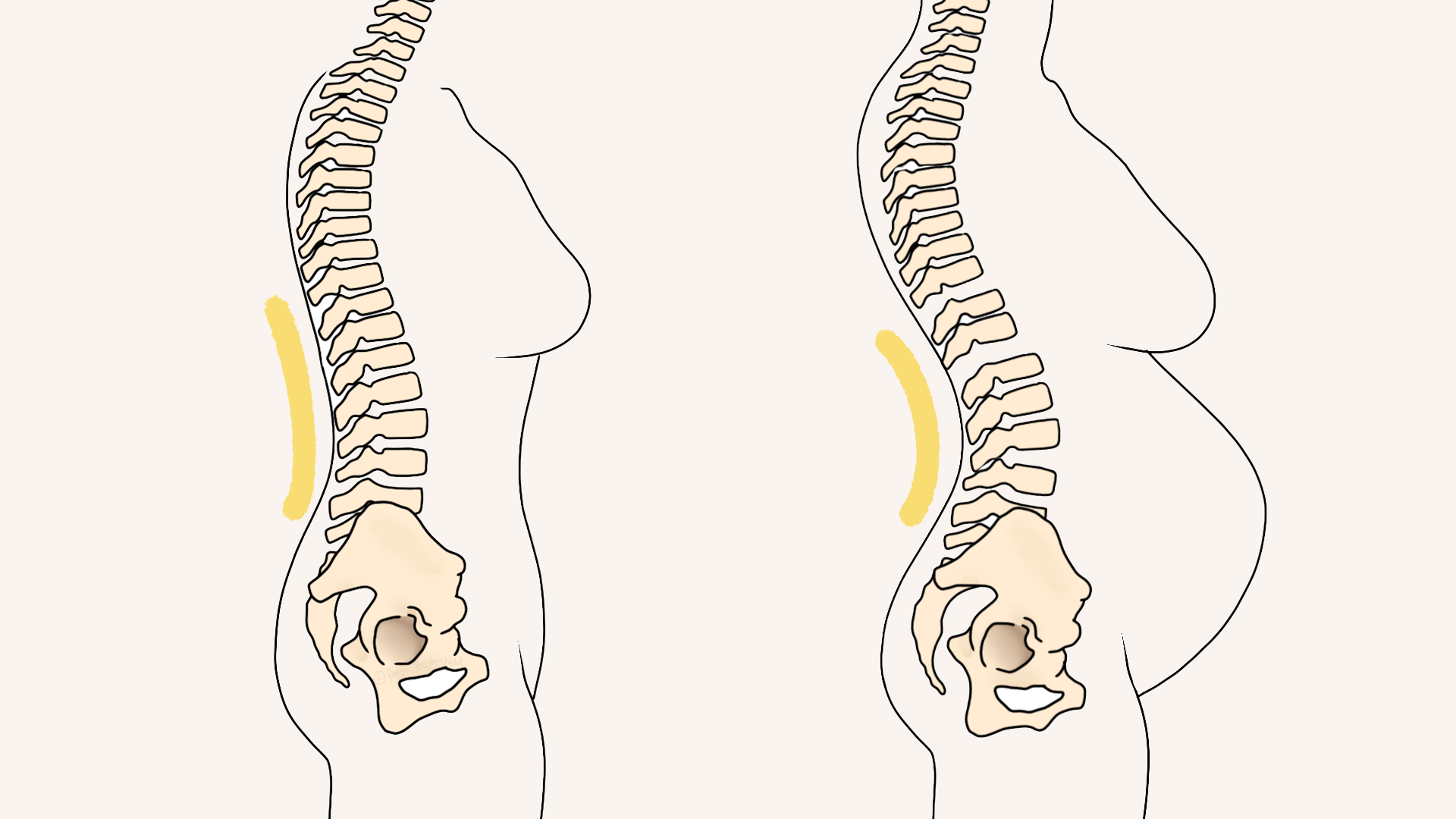
Your belly is growing. Your center of gravity is shifting forward. And your body is doing what bodies do — it's adapting. Your low back curves a little more than it used to. Your pelvis tips forward. Your ribs flare slightly. Everything reorganizes around this new weight in front of you.
This is posture in pregnancy. And for most people, that means an anterior pelvic tilt, lordosis, or rib flare — depending on who's looking and where. But really it's one thing. One pattern, expressing itself from your belly through your pelvis, spine, and ribcage.
And your low back — right in the middle of all of it — becomes a little shelf. Holding everything up. Working harder than it should. That's where the pain comes from.
When someone tells you to maintain good posture, what they're pointing at is real. This pattern is a posture pattern. They can see it.
But when the advice that follows is "keep your shoulders back and down" or "keep your ears, shoulders, and hips aligned" — that's not going to help. Trying to hold yourself in a corrected position isn't sustainable, and it doesn't address what's driving the pattern in the first place.
Most people think of posture as a position you hold. It's more useful to think of it as a balance of relationships — the curves of the spine, the distribution of weight, how everything is organized and how much effort the whole system is using.
Try something.
Find a chair with a hard, flat surface. Sit toward the front with your feet flat on the floor. Notice where you're feeling weight on your sitting bones — toward the front, the middle, or the back.
Think of your pelvis like a bowl of water. When it's in that forward tilt, you're spilling water out of the front of the bowl. See if you can gently find somewhere a little closer to the middle. Not tucking. Not forcing. Just finding a place where the water stays in the bowl.
You just changed the relationship between your pelvis, your spine, and the weight they're carrying. You may have felt a little space or length in your low back. That was posture — not trying to be upright, but using awareness to make a small shift in how things are organized.
To take this further, you need to support the part of you that's pulling everything along with it. That starts with your deep core: the muscles that wrap all the way around your torso, from your low back to the center line of your belly. You can think of them like an intrinsic belly band.
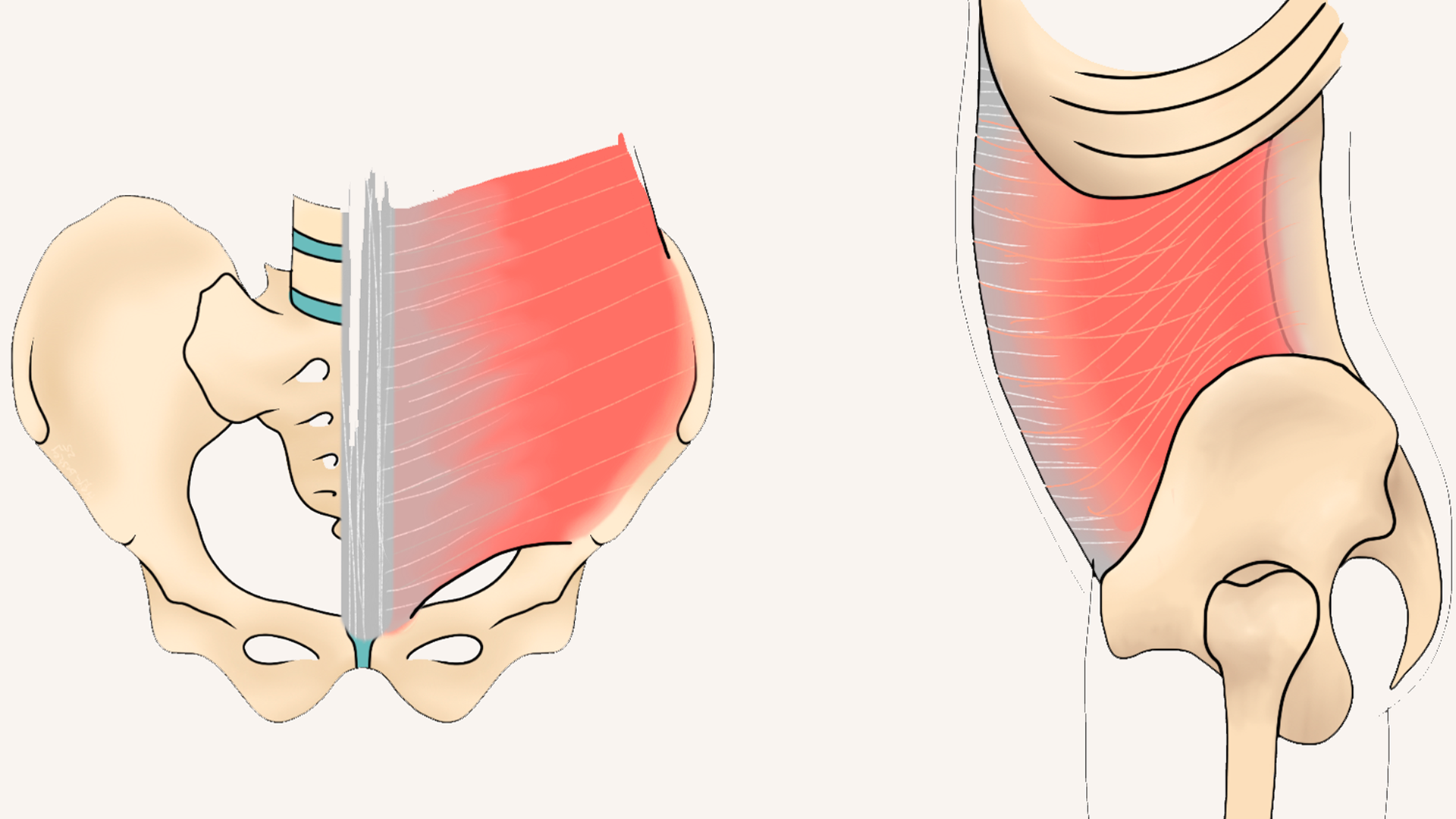
You don't need to strengthen them. You need to connect with them — so that they can gently work against the pattern, so your low back doesn't have to hold it all up on its own.
When that connection is there, something shifts. Not a corrected posture. A supported one.
Because this pattern comes with you everywhere — standing, sitting, walking, getting out of bed. What you need is an awareness that comes with you too. That's a completely different thing than trying to stand up straight.
And interestingly — your posture will probably be better.
Prenatal Core Connect is a seven-day course that works through this one layer at a time — building from awareness to a supported low back. If you'd like to go through it, the link is below.