Why Your Low Back Hurts in Pregnancy
And how connecting to your deep core can help.

Low back pain in pregnancy is really common and a lot of people treat it as a given — something you just manage until the baby arrives. But common doesn't mean inevitable, and it doesn't mean there's nothing you can do.
There's a predictable pattern behind pregnancy-related low back pain. And when you learn how to work with it in yourself, relief becomes possible.
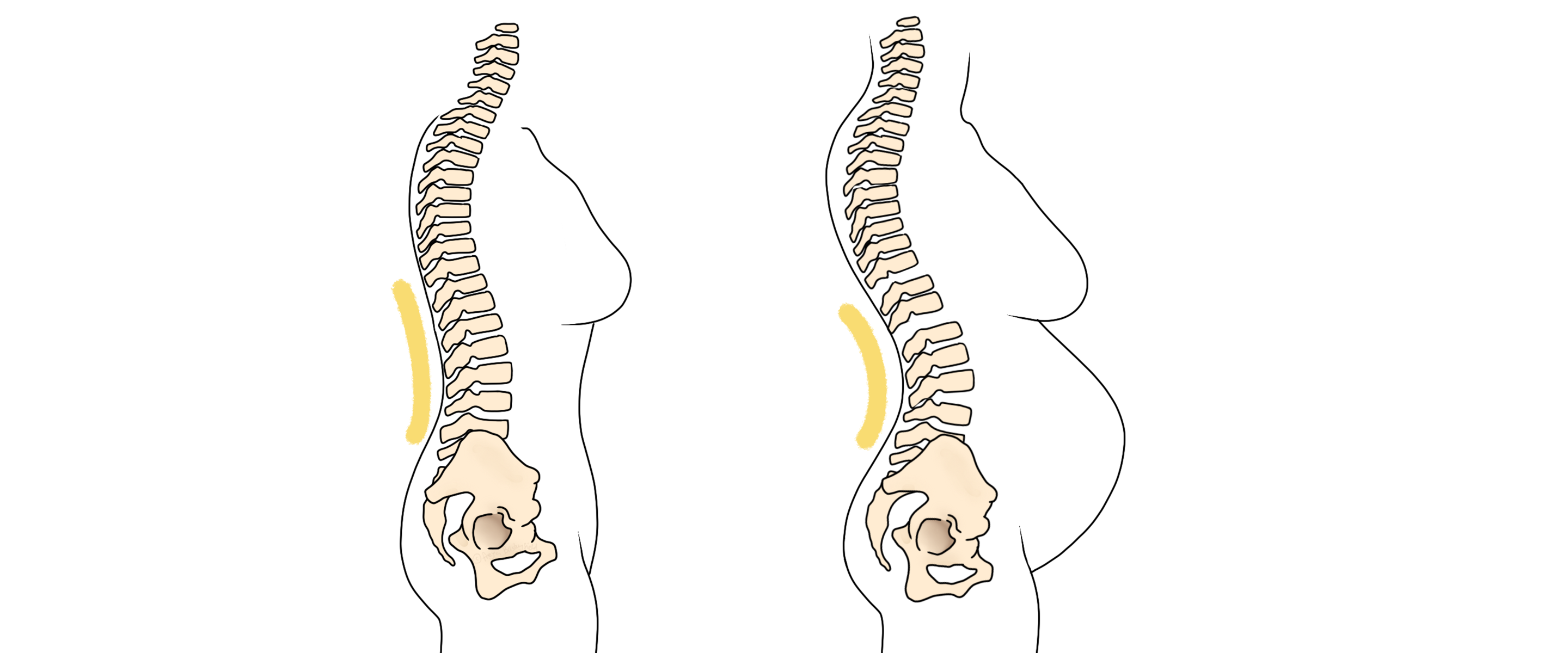
Your body is changing in a very specific and directional way. Hormones are loosening your ligaments. Your belly is growing forward. Your center of gravity is shifting. And your low back is getting pulled forward with it — literally pulled forward.
As your belly moves forward, your pelvis tips. Your ribs flare slightly. Everything reorganizes around this new weight in front of you. Your low back curves more than it used to and it becomes a little shelf — holding everything up. And that's just too much. The strain accumulates, and it shows up as pain.
This is the predictable pattern.
It has a few names depending on who you ask and where you look: anterior pelvic tilt, lordosis, and rib flare.
But I would argue that it's one thing, expressing itself from your growing belly.
If you ask Google or Claude, or mentioned it to your doctor or midwife, you've probably been told to maintain good posture. That advice is actually pointing at something real — this is a posture pattern. But the follow-up instruction is almost always something like "keep your head, shoulders, and pelvis aligned" or "pull your shoulders back." And that doesn't help.
Trying to hold yourself in a corrected position isn't sustainable. We don't "do" posture.
And it doesn't address what's driving the pattern in the first place.
I wish I could just tell you, stop letting your low back get pulled forward.
And you'r be like, okay! thanks, I'll never do that again.
But it doesn't work like that.
What actually helps is supporting what's pulling you forward –– your belly.
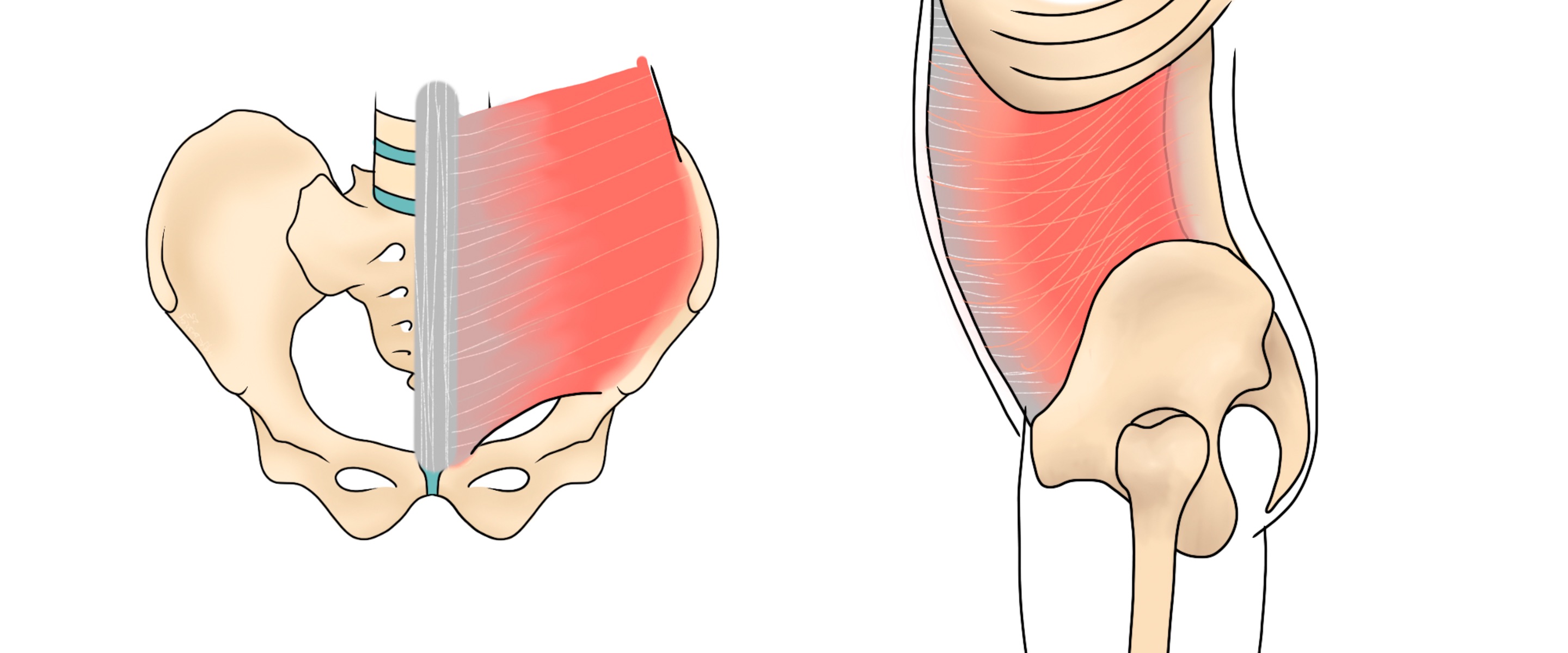
And that starts with your deep core –– the muscles that wrap all the way around from your low back to the center line of your belly (linea alba). Think of them like an intrinsic belly band. They're literally designed to support your belly and low back. And because they're physically connected to both your pelvis and your ribcage, when they engage, they gently work against the pattern — supporting your belly and reconnecting your pelvis and ribs so your low back doesn't have to hold it all up.
Your body actually does this all the time. One place is right before you sneeze, you inhale and everything wraps in and braces. That’s your deep core doing what it’s meant to do. You can try it yourself. You should feel the sides of your belly engage, or if you're further along, you might feel baby hug up and in.
That's the sensation. That's where to begin.
And it’s best to work with your deep core in relationship to the pattern. So that it can become part of how you move through your day. Standing in line. Getting out of bed. Walking. The pattern comes with you everywhere, and so the support needs to as well.
That's a different thing than a set of exercises. But it's learnable.
And for a lot of people, it makes a real difference.
If you'd like to work through this with guidance, Prenatal Core Connect is a seven-day course built for relief from low back pain through connection to your deep core — one layer of awareness at a time, filmed at 30 weeks pregnant.
Prenatal Core ConnectAll illustrations by osteopath and mum of four, Freya Baskeyfield.